The Power of the Paraprofessional
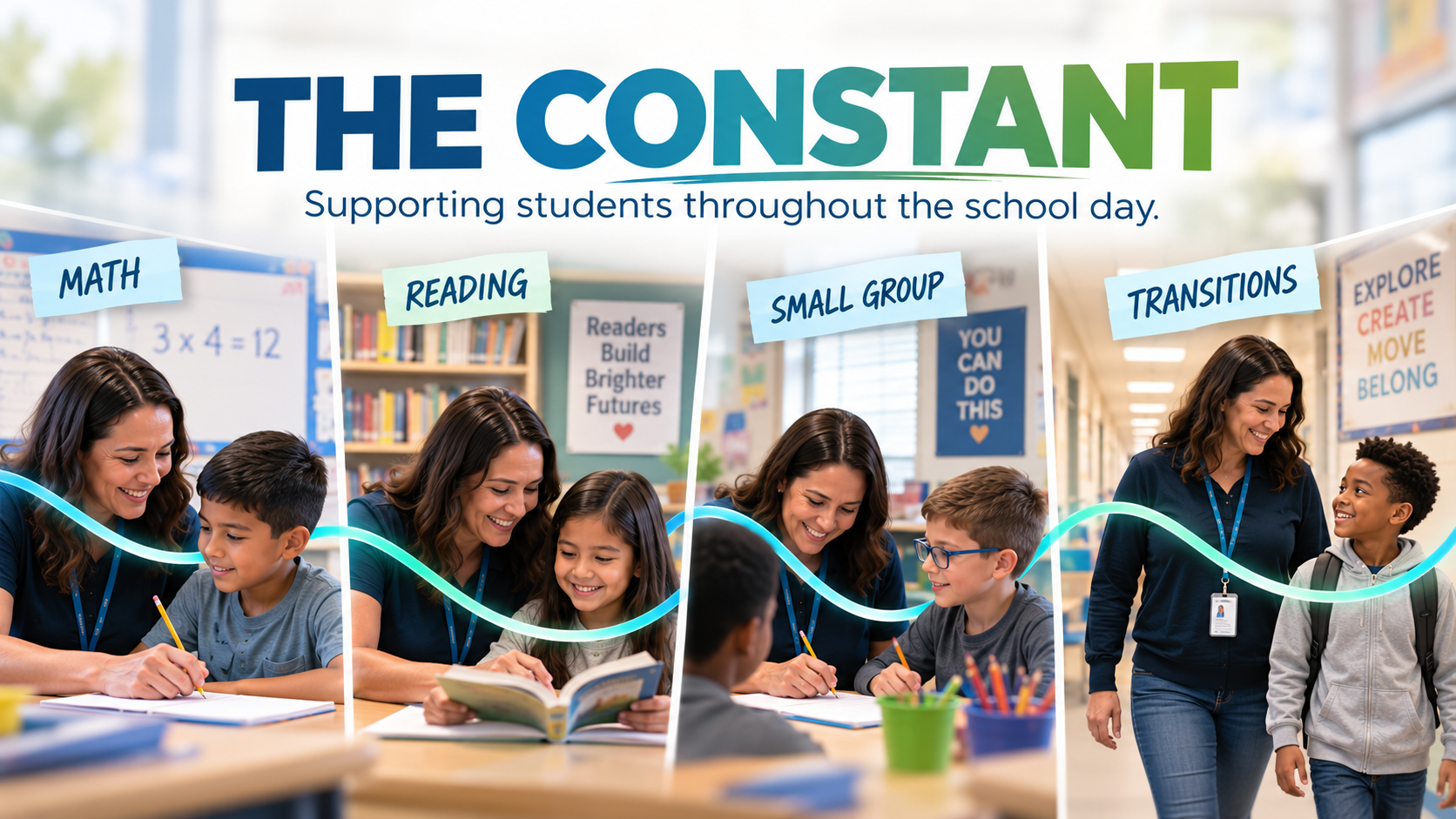
From math to reading, small groups to transitions, paraprofessionals provide a constant source of support throughout a student’s school day.
I first understood the power of a paraprofessional as a parent.
When my son was classified in third grade, he was assigned a shared paraprofessional. She wasn’t his classroom teacher, and she wasn’t assigned to him alone. She moved with a small group of students throughout the day, from classroom to classroom, subject to subject, and teacher to teacher.
But she became his constant.
She knew him. She understood his strengths, his challenges, his personality, and what helped him be successful. As he moved through different classrooms and different teachers, she provided a continuity that was incredibly important.
That experience stayed with me.
Over the years, I have seen the role of the paraprofessional through many different lenses: as an educator, administrator, consultant, coach, college instructor, and professional learning provider. Each experience has reinforced what I first understood as a parent. Paraprofessionals are an essential part of the educational team.
And the role has become increasingly complex.
Today’s paraprofessionals support instruction, facilitate small groups, reinforce academic skills, support students with disabilities and multilingual learners, help students navigate behavior and communication, build independence, and work alongside teachers to meet a wide range of student needs.
So I began asking a different question.
What can we provide paraprofessionals to help them grow, build confidence, and be even more effective in the important work they are already doing?
The conversation around this question is growing nationally.
In a June 15, 2022 Education Week article, an EdWeek Research Center survey found that 42 percent of paraprofessionals said they received too little professional development for their jobs, while 13 percent said they received no professional development at all during the previous year. More than half reported receiving 10 hours or less of training.
The article also made an important point. Professional growth for paraprofessionals should not be viewed solely as a pathway to becoming a teacher. The role itself deserves meaningful professional learning.
I couldn’t agree more.
At the same time, paraprofessionals can be an important part of the future educator pipeline. A March 4, 2026 Education Week article highlighted Fresno Unified’s teacher pipeline, including former paraprofessionals who moved into teaching through district supported pathways.
That is powerful.
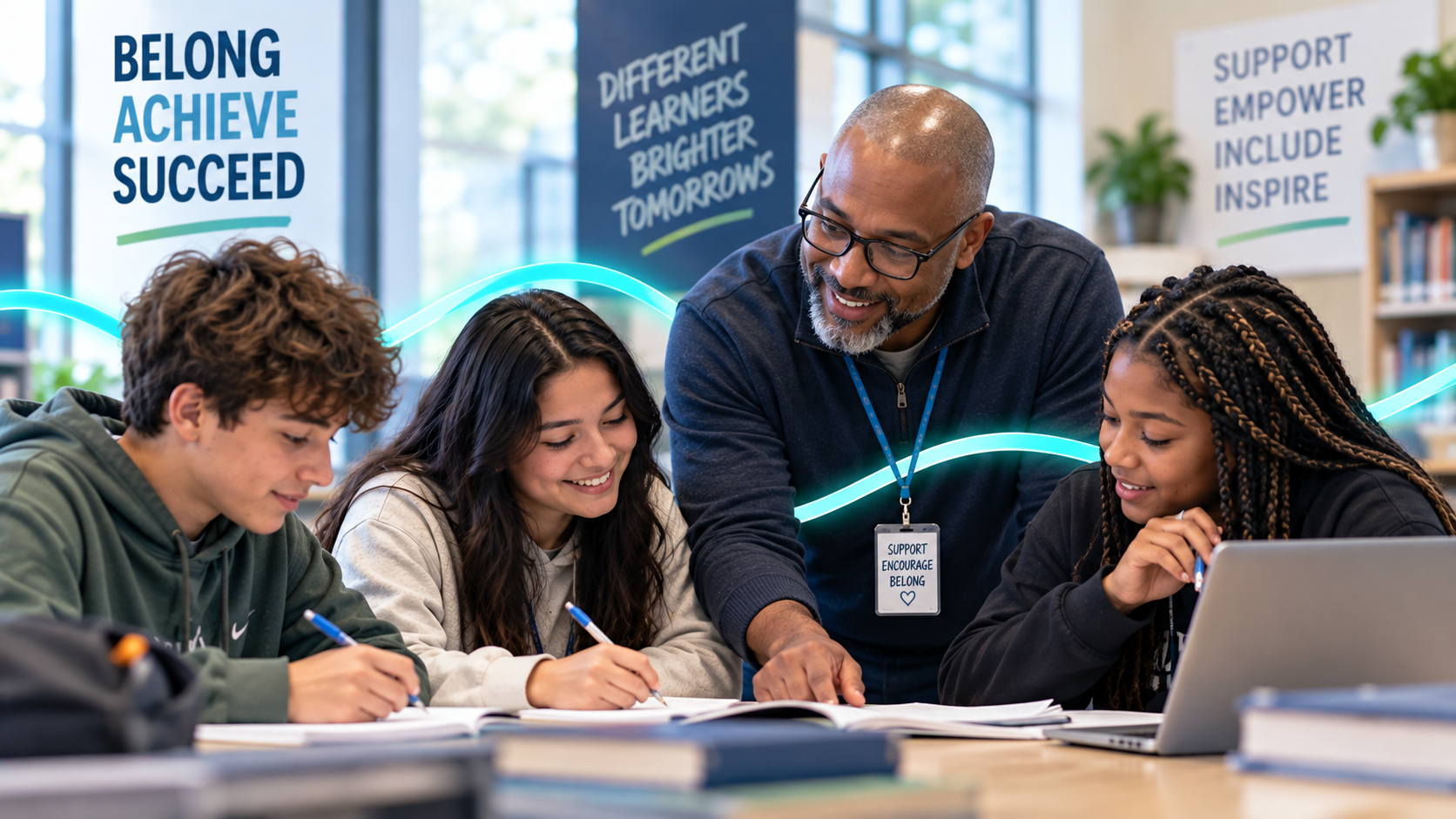
A paraprofessional works alongside a small group of older students as they collaborate on schoolwork at a classroom table, illustrating the ongoing support, guidance, and connection paraprofessionals provide throughout a student’s education.
When we invest in paraprofessionals, we are strengthening the professionals serving students today while potentially cultivating the educators of tomorrow.
But whether a paraprofessional eventually becomes a teacher or builds a career within the paraprofessional role, the professional learning they receive matters.
I believe that learning should be relevant, practical, differentiated, and ongoing.
A May 18, 2026 Education Week report examined what makes professional learning effective and highlighted the importance of ongoing learning, coaching, collaboration, feedback, and connection to practice. That is the kind of professional learning I have spent my career designing for educators.
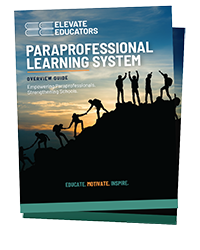
It is also the thinking behind the Elevate Educators Paraprofessional Professional Learning System.
I created the system because I wanted districts to have a scalable resource specifically designed for the paraprofessional role. The initial program includes 12 modules, representing approximately 12 hours of professional learning, focused on the real work paraprofessionals encounter every day, including classroom management, diverse learner needs, behavior and de escalation, multilingual learners, small group instruction, executive functioning, technology, academic support, communication, and more.
The learning is targeted to the role, practical enough to apply immediately, and designed to grow with the needs of districts and their paraprofessional workforce.
And this is only the beginning.
On August 31, 2026, the Michigan Education Association reported on a new Paraeducator Bootcamp that brought together more than 300 paraprofessionals for research based professional learning and practical strategies for supporting students with disabilities.
This tells me something important.
The conversation is moving from simply recognizing paraprofessionals to investing in their professional capacity.
That is exactly where I believe we need to go.
My goal is not to make paraprofessionals teachers. It is to elevate the level of professional knowledge, confidence, and practice within the paraprofessional role.
Because the work deserves it.
When a paraprofessional understands how to support a student with greater intention, when they have strategies for responding to challenging behavior, when they understand how to facilitate a small group, when they know how to support a multilingual learner, and when they feel more confident collaborating with a teacher, the impact extends far beyond that individual paraprofessional.
It reaches the classroom.
It reaches the teacher.
And most importantly, it reaches the student.
I think back to my son’s paraprofessional often. She was one person, but her consistency across his school day made a difference.
That is the power of the paraprofessional.
Today, I believe we have an opportunity to build on that power by giving paraprofessionals the professional learning, resources, and support they need to grow.
And perhaps some of those professionals will eventually become teachers, coaches, specialists, or leaders.
But whether they do or not, they deserve to see themselves as professionals whose knowledge, relationships, and daily contributions matter.
When we invest in paraprofessionals, we are investing in the people who help students navigate their school day, participate in learning, build independence, and feel known.
We are strengthening the partnership between teachers and paraprofessionals.
We are strengthening schools.
And we are creating a stronger foundation for the future of education.
That is why I believe in the power of the paraprofessional.
And that is why I created the Elevate Educators Paraprofessional Professional Learning System.
Because when we elevate the people who support our students every day, we elevate the entire educational experience.
A Resource for Districts
If your district is thinking about how to strengthen professional learning for paraprofessionals, explore the Elevate Educators Paraprofessional Discovery Guide to take a closer look at your current practices, identify opportunities for growth, and begin a conversation about what your paraprofessionals need to be successful.